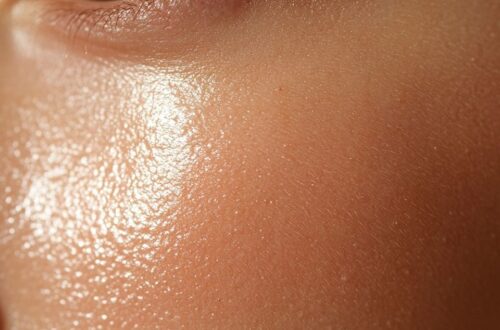
Your forehead shines like it owns the place, your cheeks feel dry and confused, and every skincare routine feels like a compromise. If that sounds familiar, welcome to the very specific chaos called combination skin.
If your forehead gets oily while your cheeks feel dry, you are not alone. Many people with combination skin feel stuck between products that do too much in one area and not enough in another. That frustration usually points to combination skin, not bad products.
Let’s break it down properly and calmly. Here are 10 clear signs you have combination skin, explained like we are chatting and comparing notes.

1. Your T Zone Gets Oily but Your Cheeks Stay Dry
This sign usually shows up first.
Your forehead, nose, and chin produce oil by midday, while your cheeks feel normal or even tight. You blot your nose but still reach for moisturizer on your face sides.
Combination skin means different zones behave differently, and yes, it feels unfair.
2. Your Skin Changes With the Weather
Your skin loves to switch personalities depending on the season.
Hot weather brings shine, clogged pores, and breakouts. Cold weather brings tightness, flakes, and sensitivity.
If your routine works one month and fails the next, combination skin probably runs the show
3. Some Products Work and Others Ruin Everything
You try a rich cream and your T zone rebels. You try a gel moisturizer and your cheeks protest.
Combination skin reacts strongly to imbalance. Products rarely feel perfect across your whole face, and that frustrates people the most.
Ever wondered why skincare feels like trial and error for you? This explains a lot.
4. Your Makeup Acts Different on Each Area
Makeup never lies.
Your foundation slides off your nose but clings to dry patches on your cheeks. Powder controls shine but exaggerates texture.
If your face looks great in one spot and chaotic in another, combination skin runs the background.
5. You Break Out Mostly in the T Zone
Combination skin breaks out strategically.
You notice blackheads on your nose, pimples on your chin, and congestion on your forehead. Meanwhile, your cheeks stay relatively calm.
Oil production in the T zone creates the perfect environment for breakouts. Your cheeks simply watch the drama.
6. Your Pores Look Larger in Some Areas
Take a close look in the mirror.
Your pores appear larger around your nose and forehead but smaller or invisible on your cheeks. This contrast shows a classic combination pattern.
Oil stretches pores, while drier areas keep them tighter. Your face tells two stories at once.
7. You Feel Both Tight and Greasy in the Same Day
This one feels confusing at first.
Your skin feels tight after cleansing, then greasy a few hours later. You wonder if your cleanser feels wrong or your moisturizer fails.
Combination skin often lacks balance, not care. Once you understand that, everything makes more sense.
8. Your Skin Reacts Differently to Actives
You apply exfoliants or serums and get mixed reactions.
Your T zone tolerates acids and retinoids well, but your cheeks feel irritated quickly. You start spot applying products without even realizing it.
FYI, this instinct actually helps. Combination skin benefits from zone specific care.
9. Your Skin Looks Shiny but Still Feels Dehydrated
This one tricks a lot of people.
Your skin shines, so you assume oiliness. But underneath that shine, your skin still feels tight or dull.
Combination skin often mixes oil and dehydration, which explains why harsh products make everything worse.
10. No One Skincare Label Ever Fits You
Oily routines feel too drying. Dry skin routines feel too heavy. Normal skin routines feel irrelevant.
If you constantly adapt advice instead of following it exactly, combination skin likely explains why.
IMO, combination skin requires the most listening and the least copying.

Combination Skin vs Oily Skin
People confuse these two all the time, so let’s clear it up.
Oily skin produces excess oil everywhere. Combination skin produces oil selectively.
Oily skin
- Shines across the whole face
- Breaks out widely
- Tolerates lightweight products
Combination skin
- Shines mainly in the T zone
- Breaks out selectively
- Needs balance, not extremes
Once you notice where the oil shows up, the difference becomes obvious.
Why Combination Skin Feels So Tricky
Combination skin sits in the middle, and middle spaces require strategy.
Your skin does not want aggressive stripping or heavy layering everywhere. It wants tailored care.
That’s why one size fits all routines fail here. Combination skin demands attention, not effort.

What Actually Helps Combination Skin
Let’s keep this realistic and simple.
Combination skin thrives when you respect zones instead of fighting them. You do not need ten products. You need intention.
Focus on:
- Gentle cleansers that do not strip
- Lightweight moisturizers with barrier support
- Optional spot treatments for oily areas
- Consistent hydration across the whole face
Less drama. More balance.
Final Thoughts
If your skin feels dry and oily at the same time, you are not confused. Your skin just speaks two languages.
Combination skin does not need extreme routines. It needs understanding, balance, and patience.
So next time your forehead shines and your cheeks complain, smile a little. Your skin makes sense now 🙂